8 January 2012

The Game Transfer Phenomenon (GTP)

Have you ever heard your mother say: 'don't play too much games or you won't be able to tell whats real or not!' to try and stop your gaming marathon? Ever subconsciously avoided red trashcans on the street because you're afraid that someone might shoot it, causing an explosion? Well, a controversial study was published by psychologists at Nottingham Trent University claim that gamers experience brief mental hiccups during which they react in the real world, as they would in a game. This is not only limited to console or PC gamers, but those who play games such as angry birds on their smart-phones. This phenomenon was named the 'Game Transfer Phenomenon' (GTP).

A famous example of GTP is the 'Tetris effect' which occurs when people devote sufficient time and attention to an activity that it begins to overshadow their thoughts, mental images and dreams. People who play tetris for a prolonged amount of time may find themselves mentally arranging shapes seen in the real world, or dream about tetris blocks falling when falling asleep. It is proposed that the Tetris effect is linked to a type of memory known as the procedural memory (the memory for how to do things). It was also reported that people with anterograde amnesia, unable to form new declarative memories, had dreams of falling shapes after playing Tetris during the day, despite not being able to remember actually playing the game. It has also been suggested that people who frequently play action games often outperform non-gamers on measures of perception, cognition, complex hand-eye coordination tasks and their contrast sensitivity.

The study involved an in-depth interview with 42 Swedish participants aged between 15~21 who play video games for at least 10 hours a week. The interviews typically lasted for 40 to 60 minutes. The most common experiences found were:

  • expressing a desire to resolve real-life issues using video game elements or as the character from a game would
  • experiencing involuntary sensations to do things as one would in a game
  • experiencing visual distortions
  • associating visual stimuli with features from games

To conclude, the study does not provide enough evidence that GTP actually exists and whether violent video games really causes people to become more violent. However, next time you see someone throw a banana skin out of their car window, you'll know what's going on.


7 January 2012

7) Improved, simpler test for heart defect in babies

Currently, heart defects are detected using antenatal scans during pregnancy or by a routine baby examination after birth. However, a study made in August 2011 by the University of Birmingham and London, Barts and the London University of Medicine, investigated a technique called 'pulse oximetry'; a simple procedure involving infrared sensors to detect oxygen levels in the blood in the fingers or toes. The study found that 99% of babies without a major heart defect were correctly identified as healthy, after an experiment involving 20,055 newborns. The test was only able to detect 75% of babies with major congenital heart defects (CHD) and 49% of babies with critical CHD, however, these tests are still reported to be better than existing screening techniques.


6 January 2012

6) Inkjet printers to print new skin

Ever wondered if inkjet printers could be modified to print anything other than your notes or homeworks? Well, now they can!

Researchers at the Armed Forces Institute for Regenerative Medicine's Wake Forest lab have successfully modified an inkjet printer to dispense living tissue directly to wounds, accelerating healing for areas of skin loss such as in burns. A burn wound is not flat, there are deeper wounds as well as shallow wounds which need to be filled in with different skin cells known as fibroblasts and keratinocytes. A camera scans the patient's body, using a laser to create a 3D map of the wound. The computer then tells the printer where to print, and which cell to use. In an inkjet printer, the bubble of ink formed is roughly the same size as a cell, allowing single cell precision.


A fibroblast is a type of cell that synthesizes the extracellular matrix and collagen, the structural framework (stroma) for animal tissues, and plays a critical role in wound healing. Fibroblasts are the most common cells of connective tissue in animals. 


5 January 2012

5) Sperm cells grown from scratch

Takuya Sato and his colleagues at Yokohama City University, Japan, extracted germ cells (cells that gives rise to gametes) from the testes of newborn mice that had not yet begun producing sperm. This was placed into an agarose gel soaked in nourishing chemicals and hormones such as fetal bovine serum and testosterone. The mice had been genetically engineered so that a protein only present in fully grown sperm cells would turn green. One month later, the team spotted that almost half their samples had turned green. The sperm were then fused with eggs to create healthy embryos, which were implanted into females to produce healthy offspring which were able to mate and give birth to their own pups.


Another similar study took place in Kyoto University, again, Japan where a research team was able to turn a mouse embryonic stem cell into sperm precursor cells (also known as primordial germ cells). The embryonic stem cells were cultured in cocktails of growth-factors and proteins, which lead to epiblast-like cells that could be used to create primordial germ cells. These were then implanted into the testes of male mice, where they further matured into sperm cells.


If these technique can be repeated with human sperm, it may lead to new methods of treating infertile men.

4 January 2012

4) Synthetic Veins for coronary artery bypass

A coronary artery bypass surgery treats the severe narrowing of the arteries that supply our heart with blood and oxygen by bypassing a blockage. It relieves the chest pain caused by angina and to minimise the risk of a myocardial infarction (a heart attack). Just like any other muscle in the body, the heart requires a blood supply for respiration to produce ATP, and for the muscles to contract. This is supplied by the right and left coronary arteries. The inner walls of the arteries can be damaged due to factors such as high cholesterol, high blood pressure and smoking, which leads to a build up of fatty deposits on the inner wall, reducing blood flow and the narrowing of the lumen. This is known as atherosclerosis. Once a coronary artery has been blocked, some areas of the heart become deprived of oxygen, causing the tissues to die, causing a heart attack.

Usually, a heart bypass surgery involves taking a 'healthy' blood vessel from the arms or the legs and grafting it around the affected areas of the coronary arteries. However, in February 2011, a group of research scientists from East Carolina University, Duke University, Yale University and Humacyte Inc. developed a method for using human muscle tissues to create human blood vessels in the laboratory that showed excellent blood flow and resistance to blockage and other complications when tested on animals.


3 January 2012

3) Artificial heart

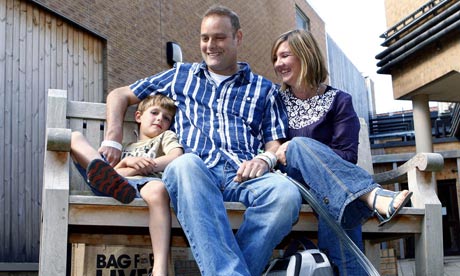
On June 9th 2011, Matthew Green, a 40-year-old father became the first UK patient to receive a portable artificial heart implant. The six hour surgery was carried out at Papworth Hospital in Cambridge. This allowed blood to be pumped to his vital organs until a suitable donor heart was found and temporarily eliminated Mr. Green's symptoms of heart failure.


The heart was a plastic device designed to replace Mr. Green's ventricles, and was fitted by surgically removing the actual ventricles, with plastic tubes to replace the valves. The device is then plugged into the plastic valves to complete the artificial system. There is a tube going through the skin (pictured above) which sends pulses of air into two balloon-like sacs in the artificial ventricles which acts as the contractions of the ventricular muscles for ventricular systole. This is powered by a driver unit which weighs around 7kg.


Mr. Green is being closely monitored for risk of his body rejecting the device and the risk of infection. 


2 January 2012

2) Genes from algae may cure blindness


Three blind mice, three blind mice,
See how they run, see how they run,
They all ran after the farmer's wife,
Who cut off their tails with a carving knife,
Did you ever see such a thing in your life,
As the three blind mice?

Well, not anymore, because in April 2011, a blind mouse had a gene taken from an algae inserted into it's retina which restored it's sight. The gene taken from the algae encodes a light-sensitive protein, and the expression (the process by which information from a gene is used in the syntheses of a functional gene product) of it was targeted to a subset of retinal cells.

The human eye works by the photoreceptor nerve cells on the inside back wall of the eye that converts light rays (photons) into electrical impulses by changing the cell's membrane potential. The impulse is then carried along the optic nerve and into the brain where the image is perceived. With an ageing global population, the number of people with blindness will continue to increase. Today, there are around 15 million people worldwide with some form of blindness (e.g. retinitis pigmentosa or age-related macular degeneration) which are damages to these photoreceptors.

The technique used at the Institute of Genetic Medicine at the University of Southern California, succeeded in restoring the ability for the mice to sense light and dark, and clinical trials on humans could begin in 2 years.